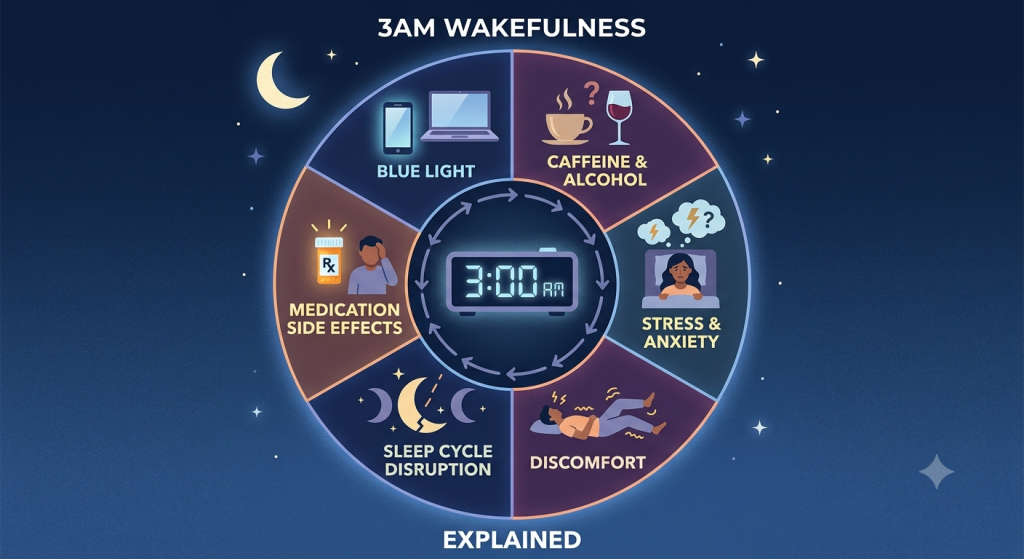
Common reasons of sleeping problem often manifest as waking up at a fixed time—like 3 AM—every night, leaving you staring at the ceiling while the rest of the world is silent. There is something distinctly unsettling about these early-hour awakenings, and you may feel frustrated, anxious, or simply exhausted by the time morning arrives. You are not alone in this experience.
Night-time awakenings, clinically referred to as sleep maintenance insomnia, are among the most widespread issues affecting millions of adults across the country. The NHS reports that difficulty staying asleep can have a significant impact on daytime functioning, mood, and long-term health. Based on guidance from the NHS, NICE, and peer-reviewed research, this article explains why these disruptions happen, what the evidence says about managing them, and when it is time to seek professional help.
What Happens to Your Body When You Wake at 3am?
Sleep is not a uniform state. It cycles through distinct stages — light sleep, deep sleep, and REM (rapid eye movement) sleep — roughly every 90 minutes. Around 3am, many people transition from deeper sleep stages into lighter sleep or a period of REM. This natural shift makes you more vulnerable to waking fully, especially if something is disrupting your sleep environment or internal physiology.
Waking briefly between sleep cycles is normal. Most people do not remember these micro-awakenings. The problem arises when something — stress, a full bladder, a spike in cortisol, a drop in blood sugar — prevents you from drifting back into the next cycle. Over time, this pattern can become self-reinforcing. Your brain begins to expect the awakening, and anxiety about it makes it more likely to recur.
Common Reasons of Sleeping Problem That Cause You to Wake Up at 3 AM
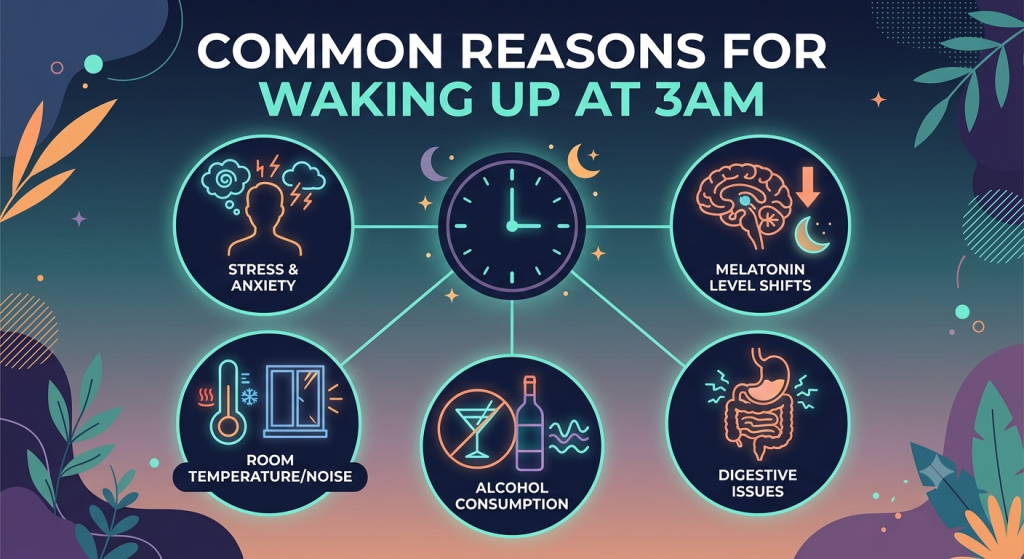
1. Stress and Anxiety
Stress is the single most frequently cited cause of night-time awakenings. When you are under psychological pressure, the body produces higher levels of cortisol and adrenaline. Cortisol naturally rises in the early hours of the morning as part of the circadian rhythm, but
2. Alcohol Consumption
If you eat dinner early or have a light evening meal, your blood glucose levels may drop significantly during the night. A drop in blood sugar triggers the release of cortisol and adrenaline as the body attempts to stabilise glucose levels. This hormonal response can cause you to wake suddenly, often feeling alert or even slightly anxious. Research in sleep medicine has linked nocturnal hypoglycaemia to sleep fragmentation, particularly in people with diabetes or irregular eating patterns.
3. Hormonal Changes
3. Blood Sugar Fluctuations If you eat dinner early or have a light evening meal, your blood glucose levels may drop significantly during the night. A drop in blood sugar triggers the release of cortisol and adrenaline as the body attempts to stabilise glucose levels. This hormonal response can cause you to wake suddenly, often feeling alert or even slightly anxious. Research in sleep medicine has linked nocturnal hypoglycaemia to sleep fragmentation, particularly in people with diabetes or irregular eating patterns.
5. Sleep Apnoea
Obstructive sleep apnoea causes repeated pauses in breathing during sleep, which trigger brief awakenings as the body gasps for air. These awakenings are often not remembered consciously but result in fragmented, unrefreshing sleep. Sleep apnoea is more common in the second half of the night when REM sleep dominates and muscle tone decreases further. The NHS estimates that sleep apnoea affects around 1.5 million adults in the UK, though many remain undiagnosed.
Obstructive sleep apnoea causes repeated pauses in breathing during sleep, which trigger brief awakenings as the body gasps for air. These awakenings are often not remembered consciously but result in fragmented, unrefreshing sleep. Sleep apnoea is more common in the second half of the night when REM sleep dominates and muscle tone decreases further. The NHS estimates that sleep apnoea affects around 1.5 million adults in the UK, though many remain undiagnosed.
6. Age-Related Changes in Sleep Architecture
As we age, the proportion of deep sleep decreases and sleep becomes lighter and more easily disrupted. Older adults are more likely to experience night-time awakenings and earlier morning waking. This is a normal part of ageing to some degree, but when it causes significant daytime impairment, it warrants attention.
7. Nocturia (Frequent Night-Time Urination)
Waking to use the toilet is one of the most common reasons for middle-of-the-night awakenings, particularly in men over 50 (due to enlarged prostate) and in people with diabetes, urinary tract conditions, or those taking diuretic medications. Even if you fall back asleep relatively quickly, repeated nocturia fragments sleep architecture and reduces overall sleep quality.
8. Poor Sleep Hygiene
A bedroom that is too warm, too bright, or too noisy can cause awakenings during lighter sleep phases. Using electronic devices before bed suppresses melatonin and can destabilise sleep throughout the night. Irregular bedtimes and inconsistent sleep schedules also weaken the circadian rhythm, making sustained sleep more difficult.
The Risks of Chronic Night-Time Awakening
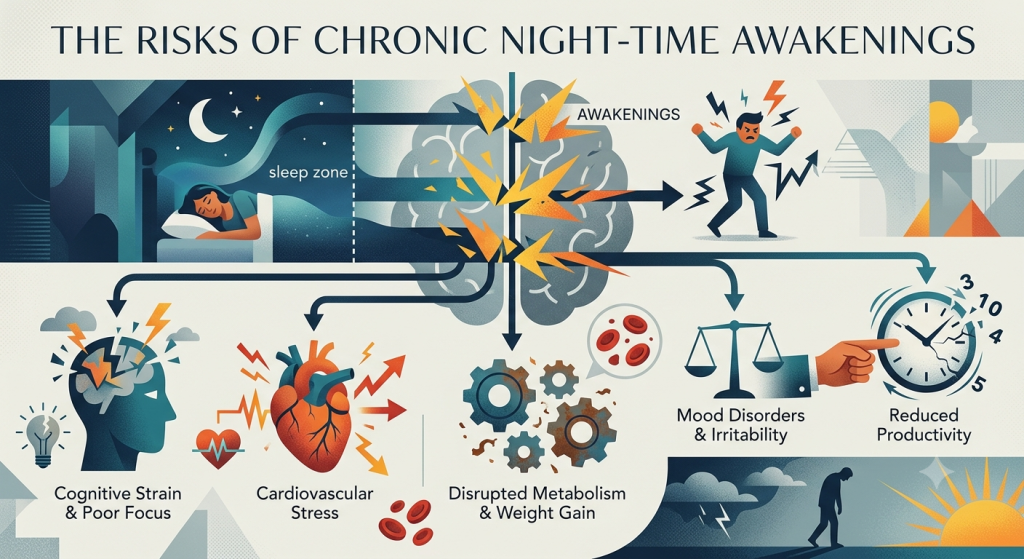
Occasional awakenings are harmless. But when waking at 3am becomes a nightly pattern, the consequences extend well beyond feeling tired. Chronic sleep fragmentation has been linked to:
Impaired concentration, memory problems, and reduced productivity
Increased risk of anxiety and depression
Weakened immune function and greater susceptibility to illness
Elevated blood pressure and increased cardiovascular risk
Weight gain and metabolic disruption, including increased risk of type 2 diabetes
Higher risk of accidents due to daytime sleepiness
The NHS and NICE both recognise chronic poor sleep as a significant public health concern, not merely a lifestyle inconvenience.
What You Can Do: Self-Help Strategies
Stabilise Your Sleep Schedule
Going to bed and waking at the same time every day reinforces your circadian rhythm and reduces the likelihood of your body defaulting to wakefulness at a set hour. This is one of the most consistently recommended sleep hygiene measures by the NHS.
Manage Evening Food and Drink
Avoid heavy meals close to bedtime, but also avoid going to bed hungry. A small, balanced snack containing complex carbohydrates and protein — such as a slice of wholemeal toast with peanut butter — can help stabilise blood sugar through the night. Limit fluids in the two hours before bed if nocturia is a problem, and reduce caffeine intake from the early afternoon onwards.
Rethink Alcohol
If you regularly wake in the early hours, try reducing or eliminating evening alcohol for at least two weeks and observe whether the pattern changes. The NHS recommends keeping alcohol intake within the guideline limit of no more than 14 units per week, spread over at least three days, and avoiding drinking in the hours before sleep.
Optimise Your Sleep Environment
Keep your bedroom at 16 to 18 degrees Celsius, use blackout curtains or a sleep mask, and consider white noise if your environment is noisy. A comfortable mattress and pillows matter more than many people realise — the NHS includes environmental comfort as a core element of sleep hygiene advice.
If You Wake, Do Not Fight It
One of the most counterintuitive but evidence-based recommendations is this: if you wake and cannot fall back asleep within roughly 20 minutes, get up. Move to another room, keep the lights dim, and do something quiet and non-stimulating — read a book, listen to calm music, or practise gentle breathing exercises. Return to bed only when you feel sleepy. This technique, called stimulus control, is a core component of CBT for insomnia and is recommended by NICE as part of first-line treatment. The reasoning is straightforward: lying awake in bed creates a learned association between the bed and wakefulness. Breaking that association is essential for re-establishing normal sleep.
Try Relaxation and Mindfulness Techniques
Progressive muscle relaxation, guided body scans, and mindfulness meditation can reduce the physiological arousal that keeps you awake after a night-time awakening. Research published in JAMA Internal Medicine found that mindfulness-based interventions produced significant improvements in sleep quality among adults with insomnia.
When Self-Help Is Not Enough: Medical Treatment
If you have tried the strategies above consistently for several weeks without improvement, it is time to consider professional help.
Cognitive Behavioural Therapy for Insomnia (CBT-I)
CBT for insomnia is the recommended first-line treatment for chronic insomnia by NICE, the NHS, and the American College of Physicians. CBT-I specifically targets the thoughts and behaviours that sustain sleep problems, including the anxiety that develops around night-time awakenings. Techniques include sleep restriction therapy, stimulus control, cognitive restructuring, and relaxation training. NICE recommends that CBT-I be offered before sleeping medication is considered.
In the UK, CBT-I is available through the NHS, either in person or through accredited digital programmes. Some GP practices now offer sleep clinics or can refer you to a specialist sleep service.
Medication
The NHS may prescribe short courses of sleeping medication for severe cases, but NICE guidance is clear that medication should not be the primary treatment for chronic insomnia. Short-term use of z-drugs (such as zopiclone) is typically limited to two to four weeks due to risks of dependence and tolerance. Prolonged-release melatonin may be prescribed for adults aged 55 and over, but only under medical supervision.
Treating Underlying Conditions
If a specific medical condition — such as sleep apnoea, a thyroid disorder, or an enlarged prostate — is driving your awakenings, treating that condition directly is the most effective approach. Sleep apnoea, for example, is typically managed with a CPAP device or a mandibular advancement device, and many patients report dramatic improvements in sleep continuity once treatment begins.
When to See a GP
The NHS advises booking an appointment with your GP if:
You are waking at 3am (or similarly) most nights for more than three weeks
Daytime fatigue, mood changes, or difficulty concentrating are affecting your life
You snore loudly, gasp during sleep, or have been told you stop breathing at night
You have an overwhelming urge to move your legs at night (possible restless legs syndrome)
Your sleep problems are accompanied by persistent low mood or anxiety
You are falling asleep unintentionally during the day
Your GP may order blood tests (to check thyroid function, blood sugar, and iron levels), refer you to a specialist sleep clinic, or recommend a sleep study to investigate further.
Frequently Asked Questions
Is waking up at 3am always a sign of a sleep disorder?
Not necessarily. Occasional awakenings are normal and can be triggered by temporary stress, noise, or an uncomfortable room. However, if the pattern persists for more than three weeks and affects your daytime functioning, it may indicate a sleep disorder such as insomnia or sleep apnoea, and is worth investigating with your GP.
Is there any truth to the idea that waking at a specific time means a specific organ is in trouble?
The idea that waking between 1am and 3am indicates a liver problem, for example, comes from traditional Chinese medicine and is not supported by modern clinical research. In evidence-based sleep medicine, fixed-time awakenings are more likely explained by circadian cortisol patterns, sleep cycle transitions, or specific triggers such as alcohol metabolism or blood sugar changes.
Can CBT for insomnia help with night-time awakenings specifically?
Yes. CBT-I includes stimulus control and sleep restriction techniques that are specifically designed to address sleep maintenance insomnia — the clinical term for difficulty staying asleep. Research, including a meta-analysis published in the Annals of Internal Medicine, has shown CBT-I to be effective for both sleep onset and sleep maintenance problems.
Should I take melatonin if I keep waking at 3am?
Melatonin is primarily useful for sleep onset problems and circadian rhythm disorders rather than sleep maintenance insomnia. Prolonged-release melatonin (Circadin) is available on NHS prescription for adults aged 55 and over, but it should only be used under medical guidance. Do not self-prescribe supplements without consulting your GP or a pharmacist.
Does eating before bed help prevent early-morning waking?
A very heavy meal close to bedtime can disrupt sleep, but going to bed hungry can also cause blood sugar drops that trigger awakenings. A small, balanced snack before bed — such as wholegrain toast with a protein source — may help stabilise glucose levels through the night. Avoid sugary snacks, which can cause a spike and subsequent crash.
References
1. NHS. “Insomnia.” NHS.uk, 2024. Available at: https://www.nhs.uk/conditions/insomnia/
2. National Institute for Health and Care Excellence (NICE). “Insomnia: Assessment and Management in Primary Care.” NICE Guideline NG219, 2024.
3. Qaseem, A. et al. “Management of Chronic Insomnia Disorder in Adults: A Clinical Practice Guideline from the American College of Physicians.” Annals of Internal Medicine, 2016; 165(2):125-133.
4. Trauer, J.M. et al. “Cognitive Behavioral Therapy for Chronic Insomnia: A Systematic Review and Meta-analysis.” Annals of Internal Medicine, 2015; 163(3):191-204.
5. NHS. “Sleep Apnoea.” NHS.uk, 2024. Available at: https://www.nhs.uk/conditions/sleep-apnoea/
6. NHS. “Tips to Help You Sleep.” NHS.uk, 2024. Available at: https://www.nhs.uk/live-well/sleep-and-tiredness/
7. Ong, J.C. et al. “A Randomized Controlled Trial of Mindfulness Meditation for Chronic Insomnia in Older Adults.” Sleep, 2014; 37(9):1553-1563.
8. Morin, C.M. et al. “Cognitive Behavioral Therapy for Insomnia: A Meta-Analysis.” JAMA Internal Medicine, 2006; 166(16):1753-1760.
9. NHS. “Why Alcohol Is a Bad Way to Help You Sleep.” NHS.uk, 2023.
‘10. Royal College of Physicians. “Sleep Disorders: A UK Perspective.” 2023.