Staring at the ceiling at 3 AM while the rest of the street is quiet is a uniquely isolating experience. If you have ever found yourself tossing and turning, willing sleep to arrive, you are far from alone. In fact, sleep problems UK wide affect roughly one in three adults at any given time.
While a restless night here and there is perfectly normal, chronic sleep deprivation can severely impact your physical health, mental wellbeing, and quality of life. Understanding why you cannot sleep is the first vital step toward finding a solution.
This comprehensive, research-backed guide explores the 15 most common poor sleep causes, how to recognise insomnia symptoms, and the most effective, medically approved ways to regain control of your nights.
Sleep Problems UK : What Are the Sleep Problems Symptoms?
Before identifying the root causes, it is important to understand what this condition actually looks like in daily life. Clinically speaking, sleep problems UK wide encompass far more than just struggling to fall asleep at night. According to NHS guidelines, chronic insomnia symptoms typically include:
- Difficulty falling asleep: Lying awake for more than 30 minutes before drifting off.
- Waking up frequently: Disturbed sleep where you struggle to get back to sleep after waking in the night.
- Early morning waking: Waking up much earlier than desired and being unable to return to sleep.
- Daytime functional impairment: Feeling unrefreshed, exhausted, irritable, or struggling to concentrate during the day.
- Anxiety about sleep: Developing a dread of going to bed because you fear you won’t sleep.
If these symptoms occur at least three times a week and persist for over a month, it is generally classified as chronic insomnia, at which point seeking professional sleep disorder treatment is highly recommended.
15 Common Causes of Sleep Problems UK Wide and How to Fix Them
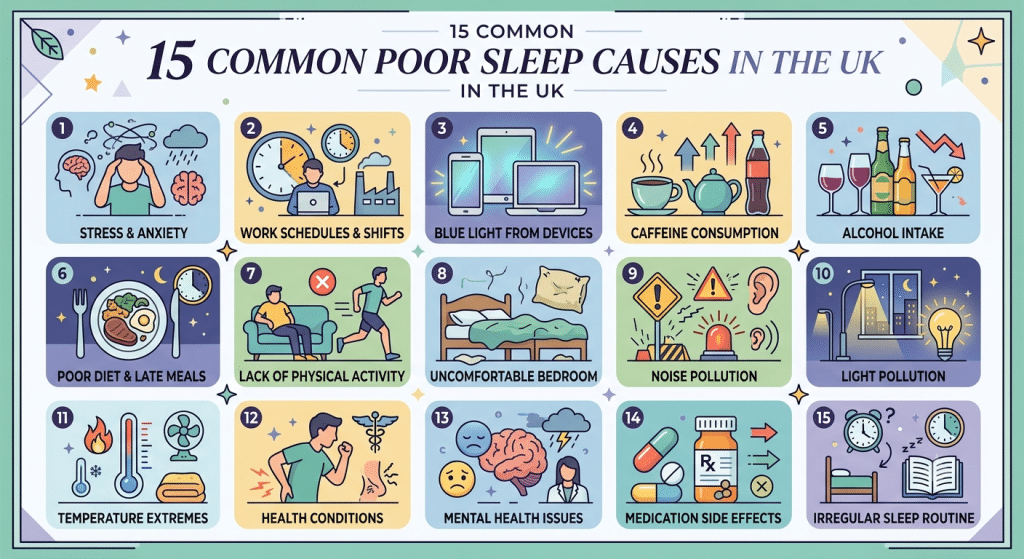
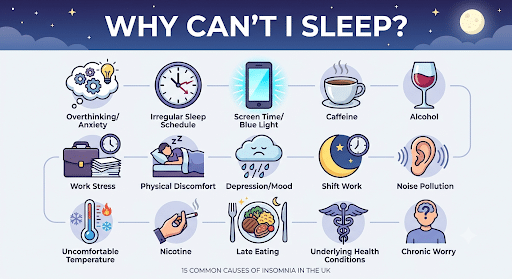
Insomnia is rarely caused by a single factor. It is usually a complex interplay of lifestyle, environment, and underlying health conditions. Here are 15 verified causes of sleeplessness.
Lifestyle and Environmental Factors
1. Stress and Worry
The UK is a fast-paced, high-stress environment. Work pressures, financial concerns, or family dynamics can keep your brain in a state of “hyperarousal.” When you are stressed, your body produces cortisol and adrenaline, which actively fight the body’s natural sleep signals.
2. Anxiety Disorders
Generalised Anxiety Disorder (GAD) goes beyond standard stress. It causes persistent, excessive worry that can make it physically impossible to relax. Racing thoughts at bedtime are a hallmark symptom of anxiety-related insomnia.
3. Depression
There is a bidirectional relationship between depression and sleep. While some people with depression sleep excessively, others experience severe insomnia. The rumination (overthinking) associated with depression often peaks when the distractions of the day fade away.
4. Caffeine and Stimulant Consumption
The UK is a nation of tea and coffee lovers. However, caffeine has a half-life of roughly 5 to 7 hours. If you have a strong cup of coffee at 4 PM, a quarter of that caffeine is still in your system at 9 PM, blocking adenosine (the brain chemical that makes you feel sleepy).
5. Alcohol Consumption
Many people mistakenly use alcohol as a nightcap to help them nod off. While alcohol is a central nervous system depressant that may induce sleep quickly, it severely disrupts sleep architecture. As the alcohol metabolises, it causes a “rebound effect,” leading to fragmented, non-restorative sleep and early morning waking.
6. Screen Time and Blue Light Exposure
Scrolling through your phone or watching TV in bed exposes your eyes to blue light. This light suppresses the secretion of melatonin (the hormone responsible for regulating your sleep-wake cycle), tricking your brain into thinking it is still daytime.
7. Shift Work and Irregular Hours
The UK has a significant proportion of shift workers in the NHS, emergency services, and transport sectors. Shift work disrupts the circadian rhythm—your body’s internal 24-hour clock—making it incredibly difficult to sleep during daylight hours.
8. An Unconducive Sleep Environment
Your bedroom should be a sleep sanctuary. Common environmental disruptors include a room that is too warm (the ideal temperature for sleep is around 16-18°C), excess light from streetlamps, a snoring partner, or an uncomfortable mattress.
Physical Health Conditions
9. Chronic Pain Conditions
Conditions like osteoarthritis, fibromyalgia, and chronic back pain are prevalent in the UK and make it highly difficult to get comfortable. Pain can also cause micro-awakenings throughout the night that you may not even remember, destroying your deep sleep phases.
10. Menopause and Hormonal Fluctuations
During perimenopause and menopause, dropping oestrogen and progesterone levels can cause hot flushes, night sweats, and anxiety. Research by the British Menopause Society highlights that sleep disturbances are among the most common and disruptive symptoms reported by women.
11. Obstructive Sleep Apnoea (OSA)
OSA is a condition where the muscles in the back of your throat relax too much, temporarily blocking your airway. This causes you to wake up gasping for air dozens of times an hour. Many people with OSA think they are sleeping through the night but wake up exhausted.
12. Restless Legs Syndrome (RLS)
RLS is a neurological disorder that causes an irresistible urge to move your legs, usually accompanied by uncomfortable creeping or crawling sensations. These symptoms peak in the evening and at night, making it incredibly hard to fall asleep.
13. Long-Term Health Conditions
Chronic illnesses such as asthma (especially if coughing worsens at night), irritable bowel syndrome (IBS), or an overactive bladder can cause frequent night-time trips to the bathroom or breathing difficulties that shatter your sleep continuity.
14. Medication Side Effects
Many common prescription drugs can interfere with sleep as a side effect. These include certain antidepressants (SSRIs), medications for high blood pressure (beta-blockers), corticosteroids, and even over-the-counter cold remedies containing pseudoephedrine.
15. Neurological Conditions
Conditions affecting the brain and nervous system, such as Parkinson’s disease, dementia, and Alzheimer’s disease, often severely disrupt the sleep-wake cycle. This can lead to confusion at night (sundowning) or a complete loss of the body’s natural sleep rhythm.
Sleep Problems UK: The Hidden Risks of Chronic Sleep Deprivation
Ignoring ongoing sleep problems, UK medical experts warn, does far more than just leave you feeling tired. The NHS cautions that chronic insomnia carries serious, long-term implications for your overall health:
- Weakened Immunity: You become more susceptible to common infections like colds and flu.
- Mental Health Decline: Insomnia exacerbates anxiety, depression, and irritability, creating a vicious cycle.
- Cardiovascular Risk: Long-term poor sleep is linked to high blood pressure, heart disease, and stroke.
- Weight Gain and Type 2 Diabetes: Sleep deprivation affects the hormones that control appetite (ghrelin and leptin), increasing cravings for high-sugar foods and impairing insulin sensitivity.
- Cognitive Impairment: Concentration, memory, and reaction times are severely blunted, significantly increasing the risk of accidents—particularly when driving.
Sleep Problems UK: Effective Self-Help Strategies to Sleep Better
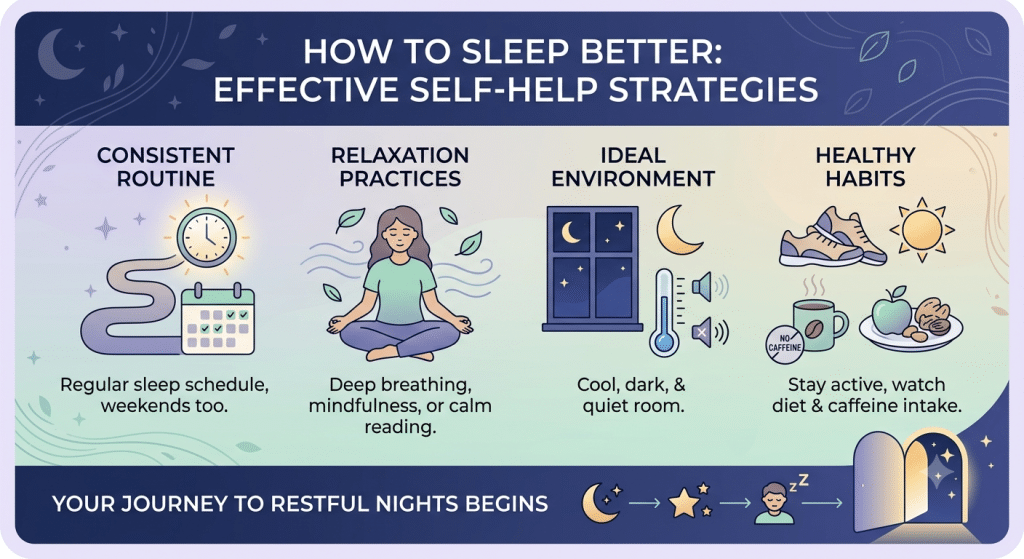
If you are experiencing mild or situational sleep problems UK wide, making simple adjustments to your daily routine can make a profound difference. Improving your sleep hygiene is the first line of defence recommended by NICE (National Institute for Health and Care Excellence).
- Maintain a Strict Sleep Schedule: Go to bed and wake up at the exact same time every day, even on weekends. This trains your brain to know when to shut down.
- The 20-Minute Rule: If you cannot sleep after 20 minutes, do not lie there getting frustrated. Get up, go to a dimly lit room, and do something relaxing (like reading a physical book) until you feel sleepy, then return to bed.
- Create a Wind-Down Routine: Dedicate the last hour before bed to relaxation. Take a warm bath, listen to a podcast, or do some gentle stretching.
- Optimise Your Bedroom: Invest in blackout curtains, remove digital clocks, use earplugs if necessary, and keep your room cool.
- Watch Your Daytime Habits: Exercise regularly (but not within 3 hours of bedtime), avoid caffeine after midday, and limit alcohol intake, especially late at night.
Sleep Problems UK: When Self-Help Isn’t Enough for Lasting Relief
If you have applied strict sleep hygiene practices for a few months and are still struggling, it is time to explore professional sleep disorder treatment.
CBT for Insomnia (Cognitive Behavioural Therapy)
According to NICE guidelines, CBT for insomnia (CBT-I) is the gold-standard, first-line medical treatment for chronic insomnia. It is highly effective and does not involve medication. CBT-I works by:
- Sleep Restriction: Temporarily reducing the time spent in bed to match the actual hours you sleep, building “sleep pressure” so you fall asleep faster.
- Stimulus Control: Re-training your brain to associate the bed only with sleep and sex, rather than wakefulness, worry, or watching TV.
- Cognitive Restructuring: Identifying and challenging unhelpful beliefs about sleep (e.g., “If I don’t get 8 hours, I will be fired tomorrow”).
- Relaxation Training: Techniques like progressive muscle relaxation to reduce physical tension.
You can access CBT-I through referral from your GP, or via digital CBT-I programmes, which the NHS increasingly commissions to reduce waiting times.
Medical Interventions
GPs are generally very cautious about prescribing sleeping pills (hypnotics) such as zolpidem or temazepam. Because these medications can cause side effects like daytime drowsiness, and carry a risk of psychological dependence and tolerance, NICE recommends they are only prescribed for short-term use (usually a maximum of 2 to 4 weeks), and only if CBT-I is not available or suitable.
If an underlying condition is causing your insomnia—such as sleep apnoea or restless legs syndrome—treating that specific condition (e.g., with a CPAP machine for apnoea, or specific dopamine-agonist medications for RLS) will usually resolve the sleep issues.
When to See a GP About Sleep Problems UK
Self-management is brilliant, but knowing when to see a GP is crucial for safeguarding your health. You should make an appointment with your doctor if:
- Your insomnia has lasted for more than a month and is impacting your daily life.
- Self-help and sleep hygiene techniques have not worked.
- Your sleep problems are causing you severe distress, anxiety, or depression.
- You suspect you have sleep apnoea (e.g., your partner tells you that you snore loudly, gasp, or stop breathing in your sleep).
- You experience unusual physical symptoms during sleep, such as sudden jerking movements, sleepwalking, or night terrors.
When you see your GP, it is incredibly helpful to keep a “sleep diary” for a couple of weeks prior. Note down what time you went to bed, how long it took to fall asleep, how many times you woke up, what you ate/drank that day, and how you felt in the morning. This provides your doctor with vital diagnostic data.
Frequently Asked Questions About Sleep Problems UK Wide
How many hours of sleep do I actually need?
While the often-cited figure is 8 hours, the NHS notes that most adults need between 7 and 9 hours. However, sleep needs are highly individual. If you consistently wake up feeling refreshed and function well during the day on 7 hours, that is enough for you.
Can insomnia be cured completely?
Yes. Unlike many chronic health conditions, insomnia is highly treatable. CBT for insomnia has a high success rate, and many people who complete the therapy return to normal, healthy sleep patterns without the need for long-term medication.
Is it bad to take over-the-counter sleep aids from the pharmacy every night?
Over-the-counter sleep aids usually contain antihistamines (like diphenhydramine). While they can help in the very short term, they are not recommended for long-term use. They can cause a “hangover” effect the next day, lose their effectiveness quickly as your body builds tolerance, and are not recommended for older adults due to risks of confusion and falls.
Does napping make insomnia worse?
If you have chronic insomnia, daytime napping is generally discouraged. Napping reduces your “sleep pressure” (the biological drive to sleep at night), making it even harder to fall asleep at your regular bedtime. If you must nap, keep it under 20 minutes and do it before 3 PM
References
- NHS England. (2023). Insomnia – Causes, symptoms and treatment. Retrieved from NHS website.
- National Institute for Health and Care Excellence (NICE). (2021). NG200: Insomnia: assessment and management in adults. NICE Guidelines.
- The Royal College of Psychiatrists. Sleep problems. Mental health information leaflet.
- British Menopause Society. (2023). Menopause and Sleep. Clinical guidance and patient resources.
- Sleep Apnoea Trust Association (SATA) UK. Information on Obstructive Sleep Apnoea.
- NHS England. (2022). CBT (Cognitive Behavioural Therapy) – How it works.
- National Institute on Aging (NIA) / NIH. A Good Night’s Sleep – Sleep and Aging. (Used for verifying neurodegenerative sleep disruption mechanisms).